
Buy Factom (FCT) in 2026: Where and How to Buy Factom Safely, Fees, and Risks
Table of Contents
- What Is Factom (FCT) and Why People Still Buy Factom
- Quick Start: How to Buy Factom in Minutes
- Where to Buy Factom: Exchanges, OTC, and Alternatives
- Liquidity, Spreads, and Order Types When You Buy Factom
- Factom Wallet Setup: Safely Holding FCT After You Buy
- Centralized Exchange Walkthrough to Buy Factom (Step-by-Step)
- OTC and P2P Options to Buy Factom Without an Exchange
- Factom to Accumulate (ACME): Migration Notes for Buyers
- Security, Storage, and Tracking After You Buy Factom
- FAQ: Common Questions About How to Buy Factom
What Is Factom (FCT) and Why People Still Buy Factom
Explore a trusted crypto purchase option at https://changehero.io/buy/eth where you can complete transactions fast while benefiting from strong security and an intuitive interface.
Factom (FCT) is one of the earliest data-anchoring blockchain protocols, launched to bring tamper-evident records to enterprises and public sector workflows. While its founding company faced challenges years ago, the open-source protocol and its community persisted, and interest in the asset never fully disappeared. Investors and researchers still buy Factom for niche trading opportunities, archival interest, and to gain exposure to the legacy protocol’s economics and history.
Today, buying Factom is different from picking a top-10 coin: listings are fewer, liquidity is thinner, and custody support may be limited. That makes due diligence essential. If you want to buy Factom in 2026, you’ll likely compare smaller centralized exchanges (CEXs), OTC desks, or community marketplaces. Each path has trade-offs in fees, speed, counterparty risk, and wallet requirements.
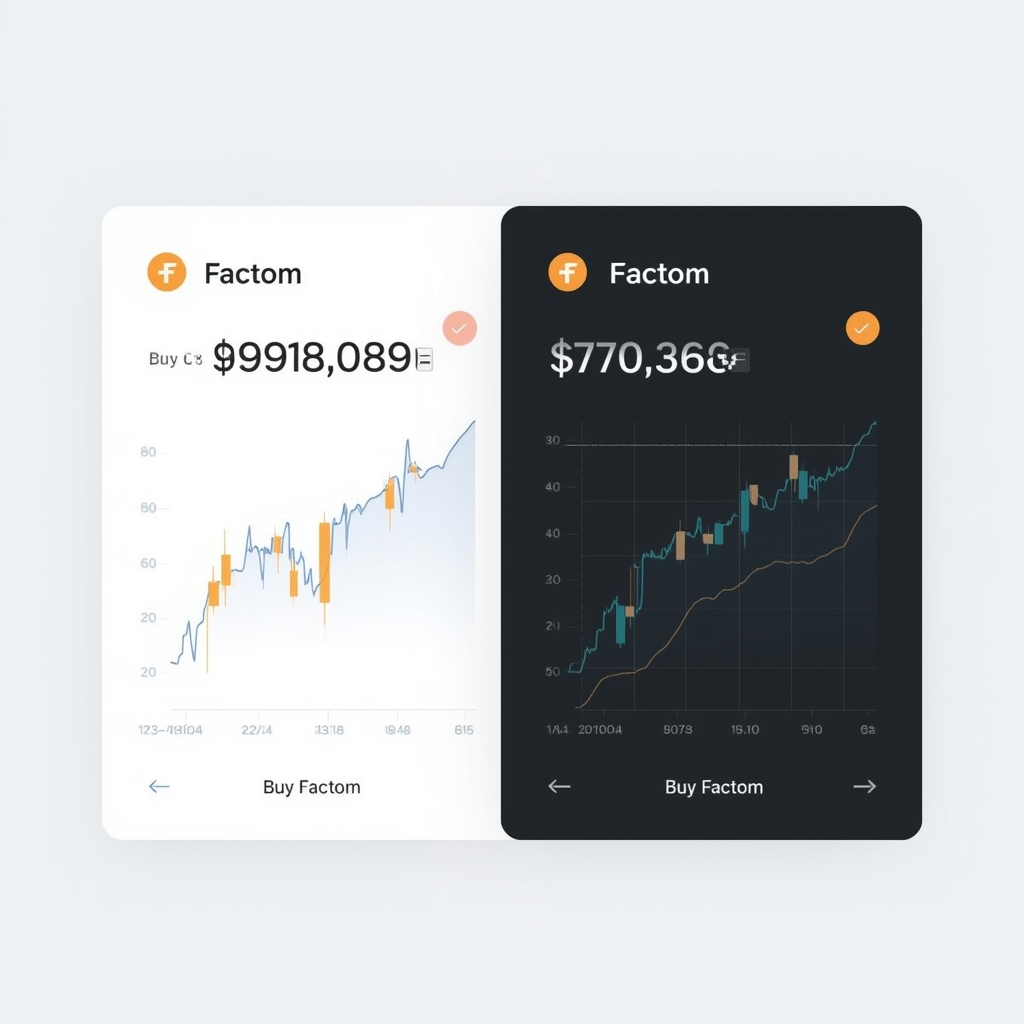
Because availability shifts over time, always verify current markets and trading pairs before you send funds. Start small, test withdrawals, and avoid any venue that won’t let you withdraw FCT to a wallet you control.
Quick Start: How to Buy Factom in Minutes
Here’s the streamlined path if you’re ready to buy Factom right now and want a practical checklist:
- Pick a venue: compare active FCT markets, 24h volume, and recent withdrawals reported by users.
- Create and verify an account (if using a CEX) and enable strong 2FA.
- Deposit funding (USDT, BTC, or fiat) and confirm fee schedules.
- Find the FCT pair, place a small test buy, and review execution price vs. mid-market.
- Withdraw FCT to your wallet; verify the transaction on the appropriate explorer if available.
- Scale up position with limit orders to reduce slippage and document costs for taxes.
These six steps cover the essentials, but the rest of this guide dives deeper into venues, liquidity, wallets, security, and the protocol’s migration context.
Where to Buy Factom: Exchanges, OTC, and Alternatives
To buy Factom in 2026, you’ll likely evaluate three main paths: centralized exchanges (CEXs), OTC/P2P marketplaces, and alternatives that involve the protocol’s successor ecosystem. Since listings change, use a reputable market aggregator to identify currently active FCT pairs and confirm that withdrawals are enabled. If you can’t find healthy CEX liquidity, vetted OTC can bridge the gap—just be methodical about escrow and counterparty checks.
Here’s a quick comparison of common buying routes for FCT:
| Path | Pros | Cons | Who It’s For | Typical Fees |
|---|---|---|---|---|
| Centralized Exchange (CEX) | Faster onboarding; price transparency; order types | Listing risk; withdrawal delays; KYC | Traders wanting convenience and charts | 0.1%–0.5% trading + withdrawal fee |
| OTC / P2P Desk | Custom sizes; direct negotiation; may access illiquid assets | Counterparty risk; slower; requires escrow | Larger tickets or rare-pair buyers | Spread + escrow service fee |
| Alternative Exposure (e.g., ecosystem token) | More liquidity in successor networks; broader support | Not the same asset; price divergence | Buyers seeking tech exposure over ticker purity | Varies by venue |
Whichever route you choose to buy Factom, confirm three things first: (1) authentic contract/asset page (avoid spoofs), (2) live withdrawal proofs from recent users, and (3) a path to self-custody. If any of these are unclear, consider a smaller test or a different venue.
Liquidity, Spreads, and Order Types When You Buy Factom
Thin markets can turn a simple market order into a costly decision. When you buy Factom, check the order book depth at your target size, not just headline volume. Wide spreads mean you may pay more than the chart suggests. Prefer limit orders near mid-price and let fills come to you. For larger tickets, split orders across time or venues to minimize market impact and slippage.
Also compare taker vs. maker fees, which can meaningfully affect your average entry on low-liquidity pairs. If your venue offers post-only orders, use them to avoid inadvertent taker fees. Finally, always re-quote before confirming if volatility spikes; stale prices can lead to unexpected fills.
Factom Wallet Setup: Safely Holding FCT After You Buy
Before you buy Factom, set up a wallet so you aren’t forced to leave coins on an exchange. Because FCT is a niche asset, support can be uneven across multi-coin wallets. Look for the most credible wallet option maintained by the protocol community or reputable developers, verify downloads from official sources, and back up your keys securely.
Wallet options at a glance:
| Wallet Type | Security | Ease of Use | Support Notes |
|---|---|---|---|
| Software (Light) | Good if device is clean; depends on OS hygiene | Easy; quick setup | Verify checksums; keep OS updated |
| Full Node | Strong; direct validation | More complex; storage + sync time | Best for power users; follow official docs |
| Hardware + Paper Backup | Strongest key isolation | Moderate; device learning curve | Hardware support may be limited; confirm compatibility |
| Custodial | Exchange/third-party risk | Easiest | Use only short term; test withdrawals early |
Avoid storing your recovery phrase online. Write it on paper or use a metal backup, keep it offline, and consider a passphrase for extra protection. If you plan to interact with any migration tools (see below), ensure the wallet you choose can sign the necessary transactions safely.
Centralized Exchange Walkthrough to Buy Factom (Step-by-Step)
If you’ve identified a CEX that lists FCT with working deposits/withdrawals, here’s a practical flow. The exact screens vary by platform, but the logic stays consistent:
- Account and KYC: Create your account, finish identity verification, enable 2FA, and set anti-phishing codes if available.
- Funding: Decide whether to deposit fiat, USDT, BTC, or another base asset. Compare deposit fees and processing times; stablecoins often settle faster.
- Locate the Pair: Search “FCT” and open the most liquid pair (e.g., FCT/USDT). Check depth and recent trades to gauge execution quality.
- Test Trade: Place a small limit order at or slightly inside the bid/ask. Verify the fill price against mid-market; adjust sizing and price if spreads are wide.
- Scale Up: If your test completes smoothly, layer additional limit orders rather than a single market sweep.
- Withdraw: Navigate to the withdrawal page, paste your FCT address, and send a dust test first. Confirm it lands, then withdraw the remainder.
- Audit Trail: Save order confirmations, tx hashes, and fee breakdowns. This helps with portfolio tracking and tax reporting later.
Two quick tips: never buy Factom on a venue that blocks withdrawals “temporarily” without a clear timeline, and don’t chase sudden spikes—thin books can reverse quickly, leaving you with poor average cost.
OTC and P2P Options to Buy Factom Without an Exchange
When exchange liquidity is scarce, OTC desks or P2P trades can help you buy Factom at negotiated terms. Work only with counterparties and brokers who have provable track records, and use escrow with transparent rules. Verify wallet ownership (e.g., message signing) and insist on an on-chain confirmation for each tranche before finalizing payment on your end.
Common safeguards include video verification during settlement, small starter clips before a full amount, and neutral arbitration in case of disputes. Document everything, from signed quotes to on-chain receipts, and confirm regional regulations if you’re using bank rails or cash equivalents.
Factom to Accumulate (ACME): Migration Notes for Buyers
The Factom community has, over time, engaged with successor efforts aimed at modernizing data anchoring and identity layers. If your primary goal is to participate in the technology’s evolution rather than holding the original ticker, research the ecosystem’s migration paths and whether historic holders had conversion mechanisms into successor networks (e.g., ACME for Accumulate). Availability and terms may vary by snapshot date, custody method, and venue support, so consult up-to-date, official community channels before taking action.
If you specifically want to buy Factom itself, treat successor tokens as an alternative exposure rather than a substitute. Prices can diverge significantly due to liquidity, tokenomics, and adoption differences. Conversely, if you simply want exposure to the core ideas behind Factom’s design, a more liquid successor asset may suit your risk tolerance and tooling better.
Whether you choose FCT or an ecosystem alternative, separate your thesis (historical asset vs. forward-looking platform) and tailor custody, risk limits, and time horizons accordingly.
Security, Storage, and Tracking After You Buy Factom
Once you buy Factom, long-term success hinges on secure storage and clean records. Treat exchange accounts as transit points, not vaults. Move coins to a wallet with keys you control, and practice least-privilege operations: spend from hot wallets sparingly while keeping most funds in cold storage.
Smart habits after you buy Factom:
- Rotate unique, strong passwords and protect them with a reputable password manager.
- Enable hardware security keys (FIDO2) and lock down recovery channels (email, phone).
- Keep OS and wallet software updated; verify signatures on downloads.
- Maintain an offline inventory of addresses, balances, and seed locations.
- Automate portfolio tracking but avoid granting spending permissions to third-party tools.
Finally, monitor network news and venue status. On thinly traded assets, a single venue issue can affect price discovery and withdrawal timelines.
FAQ: Common Questions About How to Buy Factom
Is it still possible to buy Factom in 2026? Yes, but availability is limited and changes over time. Check current listings, confirm withdrawals work, and consider OTC if exchange liquidity is insufficient.
What’s the safest way to buy Factom? Use a reputable venue with verifiable withdrawals, start with a small test, use limit orders, and withdraw promptly to a wallet you control. Never skip 2FA or software verifications.
Which base asset should I use? USDT pairs are common when they exist, but BTC or fiat pairs may appear on some venues. Compare spreads and fees across pairs before you buy Factom.
How do I store FCT securely? Prefer self-custody. Evaluate software, full node, or hardware-assisted setups, verify downloads, and keep your seed offline. Custodial storage is best kept temporary.
What about the Accumulate (ACME) angle? If you’re interested in the evolution of Factom’s ideas, research ACME and any historic migration paths. If you specifically want the legacy FCT asset, treat ecosystem tokens as separate exposures with their own risks.
What risks should I consider before I buy Factom? Listing risk, low liquidity, volatile spreads, withdrawal delays, counterparty risk (OTC), and tooling limitations. Keep position sizes aligned with these realities.
Are there tax implications when I buy Factom? In most jurisdictions, yes. Document cost basis, fees, and proceeds. Consult a tax professional versed in digital assets, especially for OTC transactions and cross-chain activity.
Can I dollar-cost average into FCT? You can, but DCA into illiquid assets requires patience and strict limits. Use time-based limit orders and avoid chasing thin-book spikes.
What if my exchange halts FCT withdrawals? Pause new buys, open a support ticket, and check official channels. If issues persist, consider alternative venues or OTC only after funds are secure.
How can I avoid scams when I buy Factom? Beware fake support reps, counterfeit token pages, and forced upgrades. Verify URLs, use official community links, and test with tiny transactions first.
FAQ
What is Factom (FCT), and why do people buy it?
Factom is a blockchain protocol designed for data integrity and anchoring records to Bitcoin; people buy FCT to speculate on its legacy tech, to gain exposure to data-anchoring narratives, or to hold for potential ecosystem revivals or swaps if they occur.
Is Factom still active, and can you still buy FCT today?
The original corporate steward went bankrupt, and FCT has been delisted on many exchanges, but the open-source protocol and community efforts persist; availability varies and liquidity is often thin, so whether you can buy Factom today depends on current listings and peer-to-peer options.
Where can I buy Factom (FCT) securely?
Start by checking reputable market data aggregators to see which exchanges, if any, currently list FCT or wrapped versions; prefer regulated exchanges with strong security and avoid obscure venues with no track record.
How do I verify whether an exchange’s FCT listing is the real Factom token?
Compare the token’s ticker, chain, and explorer links to authoritative sources, confirm contract addresses if it’s a wrapped token, and check community channels or historical documentation to avoid impostors.
Can I buy Factom with a credit card, bank transfer, or only with crypto?
If a centralized exchange lists FCT, you can often fund via card or bank and then convert to FCT; if only crypto pairs exist, you’ll first buy a liquid asset like USDT or BTC and then trade into FCT.
What should I know about liquidity and slippage when I buy Factom?
FCT markets can be illiquid, leading to wide spreads and high slippage; use small order sizes, consider limit orders, and check the order book depth before executing.
Which order types are best for purchasing Factom?
Limit orders help you control entry price in thin markets, while market orders risk poor fills; stop-limit orders can manage breakouts but still face slippage if liquidity vanishes.
How do I store Factom after purchase?
If you acquire native FCT, you’ll need a compatible Factom wallet that supports the protocol; if you buy a wrapped version on another chain, use a trusted wallet for that chain and safeguard seed phrases and keys.
Are there wrapped versions of Factom on Ethereum or other chains?
Wrapped or proxy tokens may exist, but many are unofficial; only interact with tokens whose contracts are verified by credible sources, and be cautious of similarly named assets.
How do I avoid fake Factom tokens and contract scams?
Never rely solely on a ticker; verify contract addresses from multiple trusted references, beware of airdrops and unsolicited DMs, and test with small amounts first.
What fees should I expect when I purchase FCT?
Expect deposit/withdrawal network fees, trading fees (maker/taker), potential fiat on-ramp fees, and higher implicit costs from spreads and slippage in thin markets.
What is a sensible buying strategy for Factom?
Given volatility and low liquidity, many buyers use dollar-cost averaging and staged limit orders, plus a predefined exit plan to manage risk.
What are the main risks of buying Factom now?
Key risks include delistings, thin liquidity, price volatility, potential contract or custody risks for wrapped tokens, and uncertainty about future development or adoption.
How can I sell Factom later if markets are illiquid?
Plan ahead by monitoring order books, using time-weighted exits with limit orders, considering OTC/P2P with escrow, and accepting that exits may take longer or require price concessions.
Is OTC or P2P a viable way to buy Factom?
Yes, but only use reputable escrow services or exchange-facilitated OTC desks, perform thorough counterparty checks, and keep meticulous records for compliance.
What due diligence should I do before I buy Factom?
Review current listings, confirm the token’s technical details, assess developer and community activity, read recent audits or code repos if available, and evaluate your risk tolerance and time horizon.
Are there tax implications when I purchase FCT?
Crypto purchases, trades, and disposals can be taxable events depending on your jurisdiction; keep detailed records of dates, amounts, and costs, and consult a tax professional.
Can I buy Factom without KYC?
Some DEXs and P2P venues don’t require KYC, but they carry higher fraud risks and may be restricted by local laws; comply with regulations in your area.
Can I use a hardware wallet to secure Factom?
If you hold a wrapped FCT on a supported chain like Ethereum, many hardware wallets can secure it; for native FCT, support may be limited, so verify compatibility before buying.
What red flags suggest I should not proceed with a Factom purchase?
Unverified contracts, promises of guaranteed returns, nonexistent liquidity, newly created tokens using the FCT ticker, or exchanges with no security history are major warnings.
How does buying Factom compare to buying Bitcoin in terms of liquidity and risk?
Buying Factom typically involves far lower liquidity and higher slippage than Bitcoin, making entries and exits harder and riskier, while Bitcoin benefits from deep markets and broader infrastructure.
How does buying Factom differ from buying Ethereum for utility and ecosystem support?
Ethereum offers extensive DeFi, NFTs, and robust developer tooling, while Factom’s niche is data anchoring with a smaller, legacy ecosystem; ETH generally has better on/off-ramps and custody options.
Buying Factom vs buying Chainlink: which aligns better with data integrity use cases?
Factom focuses on recording and anchoring data to blockchains, whereas Chainlink provides oracle services to feed external data to smart contracts; if you want oracle exposure, LINK is more direct, while Factom targets document integrity.
Buying Factom vs buying Arweave: how do the narratives differ?
Arweave emphasizes permanent decentralized storage, while Factom emphasizes proof-of-existence and tamper evidence via anchoring; buying Factom is a bet on verification rails, Arweave on content persistence.
Buying Factom vs buying Filecoin: what should I consider?
Filecoin’s tokenomics revolve around storage markets and miner collateral, with thicker liquidity than FCT; Factom targets data integrity anchoring, with typically thinner markets and different utility.
Buying Factom vs buying XRP: what about transaction speed and listings?
XRP is widely listed with fast settlement and ample liquidity; FCT listings are sparse and often thin, so while both are older projects, XRP generally provides easier access and execution.
Buying Factom vs buying a micro-cap token on a DEX: which is riskier?
Both can be high risk, but micro-caps on DEXs add smart contract and rug-pull risk; Factom’s risk leans toward liquidity and legacy uncertainty, while DEX micro-caps face heightened contract and team risks.
Buying Factom vs buying a regulated crypto ETP/ETF: how do custody and compliance compare?
A regulated ETP/ETF offers institutional custody and clearer reporting but no direct token control; buying Factom gives you direct exposure but requires self-custody, counterparty vetting, and handling illiquidity.
Buying Factom vs staking a major proof-of-stake token: what’s the trade-off?
Staking PoS assets can generate yield with relatively deep liquidity, while buying Factom is a speculative exposure without mainstream staking yield and with higher execution risk.
Buying Factom vs building a basket of data-integrity tokens: which is more resilient?
A diversified basket across data-anchoring, oracles, and storage (e.g., Factom, Chainlink, Arweave/Filecoin) may reduce project-specific risk; buying only Factom concentrates risk in a legacy asset.
Buying Factom vs buying stablecoins: how does risk differ?
Stablecoins aim to minimize volatility (with issuer and peg risks), while Factom is a speculative, volatile asset with liquidity constraints; choose based on risk tolerance and purpose.
Buying Factom vs buying a leading layer-1 like Solana or Avalanche: what to expect?
Leading L1s have active ecosystems, frequent listings, and deeper markets; Factom offers a niche, older thesis with potential upside but materially higher liquidity and execution risks.