Table of Contents
1. What is FTX Token (FTT) and why availability matters 2. Where to buy FTX Token: the quick answer 3. How to buy FTX Token on a DEX (step-by-step) 4. DEX vs CEX: best way to buy FTT 5. How to verify the real FTT contract before you buy 6. Liquidity, slippage, and gas: getting a better fill 7. Funding your purchase: on-ramps, bridges, and wallets 8. Security tips when you buy FTX Token 9. Compliance, taxes, and regional availability 10. FAQs: where to buy FTX Token and common pitfallsWhat is FTX Token (FTT) and why availability matters
Ready to explore smart contract platforms? You can buy ethereum quickly using a secure service with transparent fees, fast processing, and a smooth experience for beginners and advanced users.
FTX Token (FTT) is the legacy utility token associated with the now-defunct FTX exchange ecosystem. Since the platform’s collapse, FTT has seen extreme volatility, delistings on major centralized exchanges (CEXs), and fragmented liquidity. That’s why the question of where to buy FTX Token isn’t as simple as naming a few big exchanges—availability shifts, markets are thinner, and risk is materially higher than with mainstream assets.
Today, most reliable access points are decentralized exchanges (DEXs) on Ethereum where FTT circulates as an ERC‑20 token, along with occasional listings on smaller or offshore centralized platforms. If you’re exploring where to buy FTX Token, understand that liquidity, spreads, and counterparty risks can differ dramatically by venue, and prices can move quickly on relatively small orders.
Nothing in this guide is financial advice. FTT is a high‑risk asset with real potential for loss. Always double-check contract addresses, confirm liquidity before executing, and never invest more than you can afford to lose.
Where to buy FTX Token: the quick answer
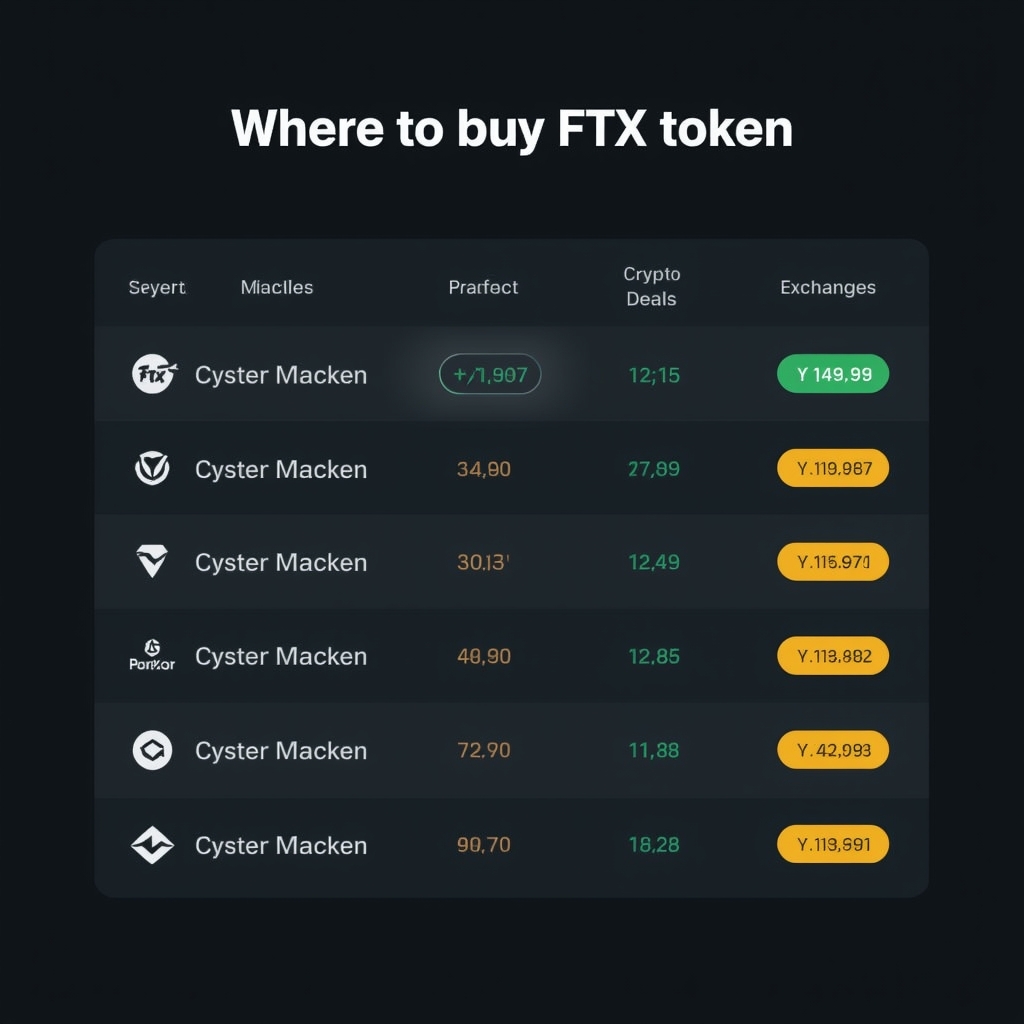
The most consistent way to buy FTX Token right now is on Ethereum-based DEXs (for example, via popular aggregators that route to Uniswap-style liquidity). You’ll connect a self-custody wallet, import the verified FTT contract, and swap ETH or a stablecoin for FTT. Occasionally, niche centralized exchanges list FTT pairs; availability changes frequently, so check real-time listings on reputable data aggregators before sending funds.
In short, if you want the highest likelihood of finding a market, decentralized exchanges are your primary answer for where to buy FTX Token. If you prefer a custodial route, look for smaller CEXs that still support FTT, verify deposits are enabled, and confirm withdrawal functionality before funding any account.
How to buy FTX Token on a DEX (step-by-step)
Here’s a concise process to buy FTT through a DEX on Ethereum. The same logic applies if you use a DEX aggregator that sources the best route.
1) Install or open a self-custody wallet (e.g., a reputable browser-extension or hardware wallet) and ensure it’s connected to Ethereum Mainnet.
2) Fund the wallet with ETH for gas and your purchase (or fund with a stablecoin like USDC and keep some ETH for gas).
3) Go to a trusted DEX or DEX aggregator. Paste the verified FTT contract address (see the verification section below). Do not rely on token name search alone.
4) Select the token you’re selling (ETH/USDC) and FTT as the token you’re buying. Check the displayed price, minimum received, and estimated gas fees.
5) Set a reasonable slippage tolerance. With thin liquidity, smaller slippage is safer, but too small may cause failed transactions. Start low, then adjust if necessary.
6) Review the route and price impact. If price impact looks unusually high, reduce order size or try a different route or time.
7) Confirm the swap in your wallet. Wait for on-chain confirmation and verify FTT appears in your wallet (you may need to add the token to the wallet display).
8) Consider moving FTT to a hardware wallet for long-term storage, and record your transaction details for tax and tracking purposes.
DEX vs CEX: best way to buy FTT
If you’re weighing decentralized versus centralized routes for where to buy FTX Token, use the comparison below to decide what fits your priorities.
| Factor | DEX (e.g., via aggregator/Uniswap-style pools) | Smaller CEX (if listed) |
|---|---|---|
| Availability | Typically accessible; depends on on-chain liquidity | Inconsistent; listings can change, deposits/withdrawals may pause |
| KYC | No account/KYC; wallet-based | Usually required for fiat deposits and larger withdrawals |
| Custody | You control keys and coins | Exchange holds custody until you withdraw |
| Fees | Network gas + DEX fee; can be higher during congestion | Trading fee + potential deposit/withdrawal fees |
| Slippage | Possible in thin pools; adjustable in UI | Varies by order book depth; may have tighter spreads |
| Counterparty Risk | Smart contract risk; you manage funds | Exchange risk; ensure withdrawals work and platform is solvent |
| Order Types | Market swaps; limit via certain DEX tools | Market, limit, stop (varies by platform) |
For many users, DEXs are the straightforward route to buy FTX Token today, precisely because they don’t rely on centralized listing decisions. If you go the CEX route, confirm liquidity, check recent withdrawals, and start with a small test deposit first.
How to verify the real FTT contract before you buy
Because “FTX” and “FTT” are widely spoofed, the most important step in figuring out where to buy FTX Token safely is verifying the correct contract. Never paste an address from social media or random blogs. Instead, use a reputable data aggregator’s token page, then click through to the contract on a recognized block explorer.
| What to verify | Where to check it | Why it matters |
|---|---|---|
| Contract address matches across sources | Reputable aggregator + Etherscan link | Eliminates fake/clone contracts |
| Token symbol/name alignment | Aggregator page + wallet import prompt | Prevents adding similarly named tokens |
| Token decimals | Etherscan contract details | Incorrect decimals can distort balances |
| Holders and recent transfers | Etherscan “Holders” and “Transfers” tabs | Gives context on liquidity and activity |
| DEX pool links | On aggregator/DEX info pages | Shows where liquidity actually resides |
Once you confirm the contract, use the “import token” flow in your DEX interface or wallet by pasting the verified address. If your wallet shows a warning, re-verify before proceeding. A few extra minutes here can prevent irreversible mistakes.
Liquidity, slippage, and gas: getting a better fill
Thin liquidity is a central challenge when deciding where to buy FTX Token. A few practical pointers can reduce bad fills:
- Split large orders into smaller chunks. This lowers price impact and can average your entry.
- Use a DEX aggregator that scans many pools and chooses the best route.
- Watch gas prices. Executing during quieter network periods can meaningfully cut costs.
- Adjust slippage carefully. Too high invites frontrunning; too low may cause failed transactions. Start around 0.5%–2% depending on pool depth and volatility, then tune from there.
- Consider limit tools. Some aggregators or advanced DEX UIs offer limit orders that settle on-chain, which can help when markets are choppy.
Before you buy FTT, preview the trade and check the “minimum received” value. That figure reflects your worst-case output given your slippage tolerance. If the minimum seems far off the quote, reduce size and reassess.
Funding your purchase: on-ramps, bridges, and wallets
If you’re new to self-custody and still figuring out where to buy FTX Token, the funding flow typically looks like this:
- Fiat to crypto: Use a regulated on-ramp to buy ETH or USDC on Ethereum. Popular on-ramps often integrate directly with wallets, or you can buy on a major CEX, then withdraw to your wallet.
- Withdraw to your wallet: Send ETH/USDC to your Ethereum address. Always test with a small amount first and confirm the correct network.
- Bridge only if needed: If your funds are on another chain, use a reputable bridge to move to Ethereum. Bridges introduce extra risk—avoid unless necessary.
- Prepare for gas: Keep a buffer of ETH for transaction fees. Complex routes and busy times will cost more.
For wallet hygiene, enable phishing protection in your browser, verify extensions, and back up your seed phrase offline. If you intend to hold FTT for a while, consider a hardware wallet for durable, offline key management.
Security tips when you buy FTX Token
When researching where to buy FTX Token safely, prioritize operational security. A brief checklist:
- Bookmark official aggregator and explorer links; avoid ad results.
- Double-check every pasted address; compare first and last characters.
- Revoke token approvals after swaps using a trusted approval manager.
- Keep software updated: wallet, browser, and any security plugins.
- Beware of airdrops and “support agent” DMs. Real teams don’t ask for seed phrases.
- Confirm that your chosen CEX (if using one) supports withdrawals before depositing. Send a tiny test first.
Remember, the safest place to “store” your crypto is a hardware wallet you control—never a screenshot, cloud note, or email. If a proposition promises guaranteed profits from FTT, it’s almost certainly a scam.
Compliance, taxes, and regional availability
Laws differ by country. Some regions restrict access to certain tokens, and local exchanges may decline to list FTT due to regulatory or risk considerations. Before you decide where to buy FTX Token, review local rules on self-custody, DeFi usage, and token speculation. When in doubt, consult a qualified professional in your jurisdiction.
On taxes, most countries treat token swaps as taxable events. Track your cost basis, gas fees, and proceeds. Many portfolio trackers can import transactions from your wallet and help you generate tax reports. Good records save time at year-end and help you understand your true performance after fees and taxes.
FAQs: where to buy FTX Token and common pitfalls
Is FTT still tradable? Yes—primarily via decentralized exchanges on Ethereum and, at times, on smaller centralized exchanges. Liquidity can be thin and volatile.
What’s the safest way to buy FTX Token? Use a DEX or aggregator with the verified contract, start with a small test trade, keep slippage modest, and confirm outputs before signing. If using a CEX, verify deposits/withdrawals and platform health first.
How do I find the correct contract? Start from a reputable token data aggregator’s FTT page, then click the contract link to a trusted block explorer. Cross‑check address, decimals, and activity before importing to your wallet.
Why did my swap fail? Common reasons include slippage too low, gas too low, or pool rebalancing mid-trade. Increase slippage slightly, pay current gas, or retry with a smaller size.
Can I use a limit order? Some DEX tools and aggregators offer on-chain limit orders. They can reduce slippage on thin markets but may take longer to fill.
Do I need KYC? Not on DEXs. Centralized exchanges usually require KYC, especially for fiat funding and larger withdrawals.
Key takeaways when deciding where to buy FTX Token:
- DEX access is the most consistent; check liquidity first.
- Smaller CEX listings can appear/disappear—verify in real time and withdraw promptly.
- Contract verification and security hygiene matter more than ever with niche tokens.
- Manage size, slippage, and gas to avoid costly fills and failed transactions.